
Organic supplements for weight loss: A science-based selection guide
Author: Dr. Evelyn Thorne, Chief Clinical Investigator, Botanica Vitae
Medical reviewer: Dr. Evelyn Thorne, Chief Clinical Investigator, Botanica Vitae
Table of Contents
You’ve probably seen the pitch: an organic capsule that supposedly burns fat, controls appetite, balances hormones, and makes weight loss easier without turning your life upside down.
The problem is that the word organic tells you very little about whether a supplement actually works for weight loss.
When we assess organic supplements for weight loss, we start with a more useful question: what does the ingredient do in controlled human research, at what dose, and for how long? Certification, sourcing, formulation and third-party testing matter, but they don’t turn a weak ingredient into a proven weight-loss treatment.
This guide looks at what “organic” really means, which ingredients have credible human evidence, where the research is still thin, how to compare products, and which marketing claims deserve a raised eyebrow. We’ll also look at women’s specific nutritional needs, because a 30-year-old who menstruates has a different supplement profile from a post-menopausal woman.

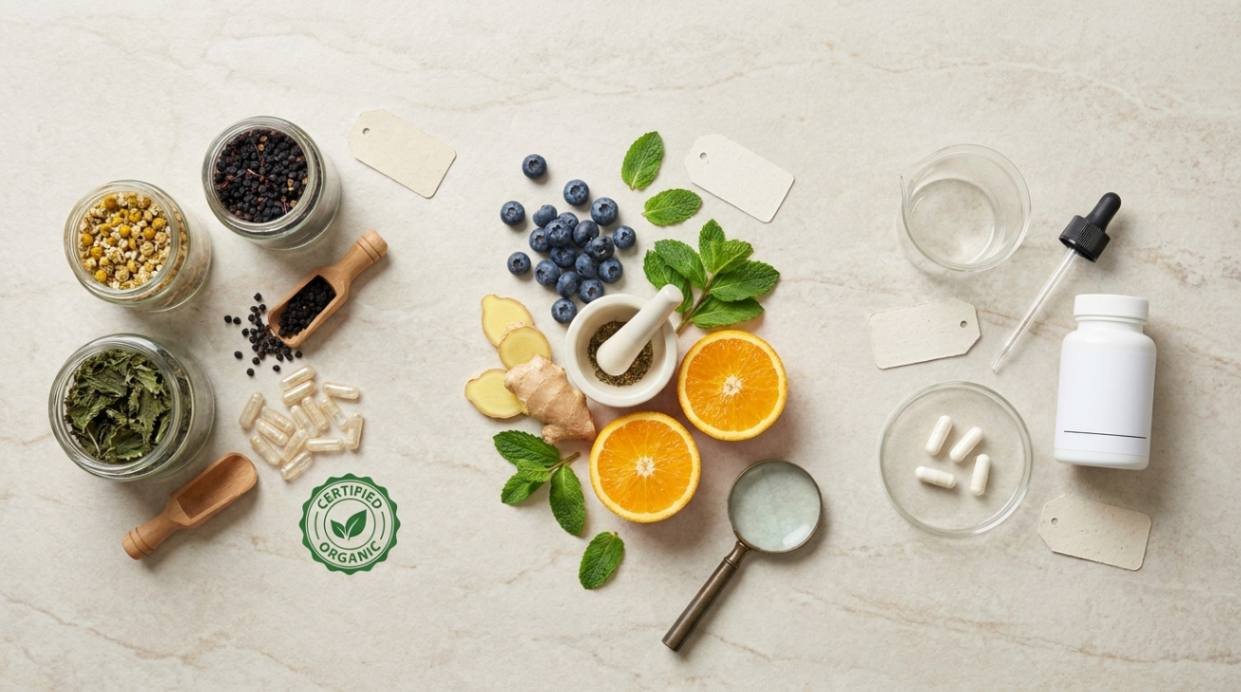
What “organic” really means in supplements
“Organic,” “natural,” and “plant-based” are often used as if they mean the same thing. They don’t.
In the United States, USDA organic certification is based on standards governing how agricultural products are produced, handled and labeled. USDA rules recognize categories including “100% organic,” “organic,” and “made with organic” ingredients.
That distinction matters when you’re comparing natural organic supplements.
A bottle can contain an organic botanical and still contain other non-organic ingredients. A product can also be marketed around a plant-derived ingredient without being a USDA-certified organic finished product.
More importantly, organic certification isn’t an efficacy certificate.
It doesn’t mean the product will reduce body fat. It doesn’t mean the dosage has been studied in humans. And it doesn’t automatically mean the finished capsule has been independently tested for every contaminant a buyer might care about.
This is where supplement marketing gets slippery.
USDA organic certification establishes standards around agricultural production and handling. It doesn’t turn the USDA seal into a clinical-trial badge.
The original editorial brief cited an Ayah Labs 2026 analysis arguing that organic certification shouldn’t be interpreted as proof that certified botanical ingredients are completely free from pesticide residues. That distinction is worth discussing, but we wouldn’t present the stronger claim that most certified lots contain residues unless supported by representative testing data.
The same caution applies to heavy metals. Organic certification doesn’t itself establish that every finished supplement has been independently tested for lead, arsenic, cadmium or mercury. If contaminant testing matters to you, look for actual third-party testing or a certificate of analysis rather than assuming certification answers the question.
| Label or claim | What it tells you | What it does not prove |
| 100% Organic | Agricultural ingredients meet applicable organic requirements | That it causes weight loss |
| Organic | At least 95% certified organic content under USDA rules | Clinical effectiveness |
| Made with organic ingredients | At least 70% organic ingredients | That the whole product is organic |
| Natural | Ingredient or marketing description | Organic certification or efficacy |
| Third-party tested | Specific characteristics have been independently tested | That the product works |
| Clinically studied ingredient | Ingredient has been investigated in humans | That this exact product has the same effect |
Top categories of organic supplements for women
The most important point here is simple: an organic ingredient isn’t automatically a weight-loss ingredient.
The NIH Office of Dietary Supplements says there is little scientific evidence that weight-loss supplements work overall. Weight-loss products commonly contain multiple ingredients, and studies are often small or short. NCCIH similarly warns that many supplements marketed for rapid weight loss haven’t been proven safe or effective.
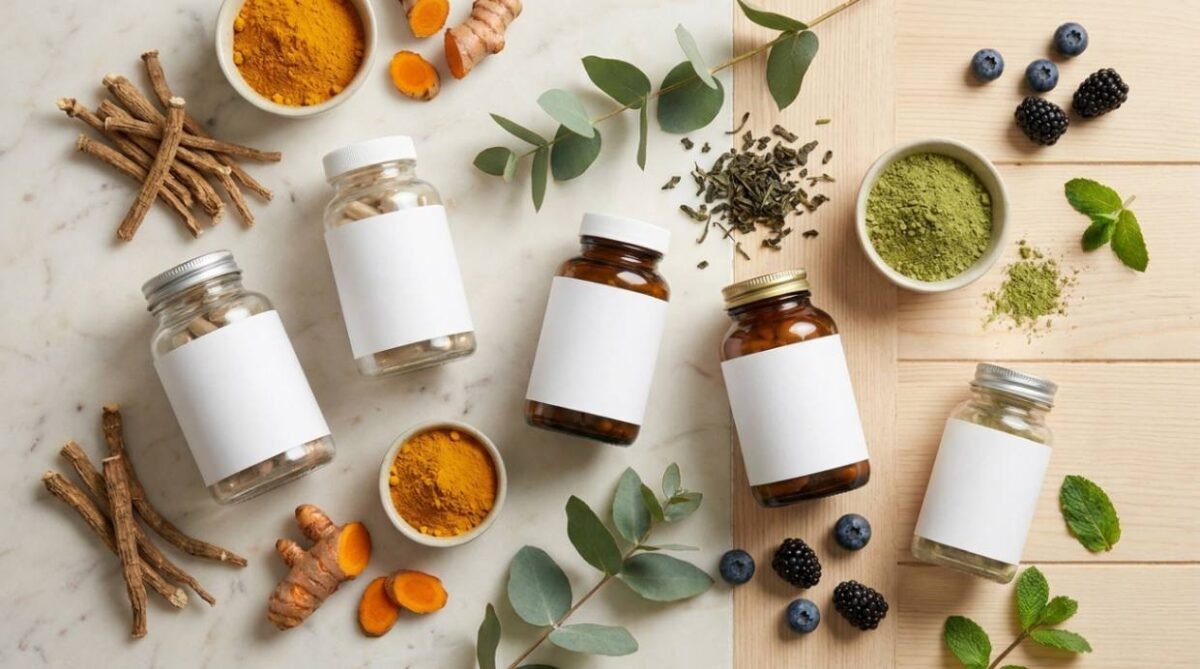
So rather than creating a fictional “best” list, it’s more useful to separate ingredients according to what researchers have actually investigated.
Hormonal balance
Ashwagandha, shatavari, maca, chasteberry and DIM are frequently marketed as organic supplements for hormonal balance.
Ashwagandha has attracted particular research interest. Studies have investigated its effects on stress, cortisol and reproductive hormones, but that doesn’t establish it as a universal treatment for something broadly described as a “hormonal imbalance.”
The original brief cites a Thieme Connect systematic review and meta-analysis examining hormonal modulation with Withania somnifera. That research is worth distinguishing from marketing claims: a change in a hormone is not automatically the same thing as an improvement in a clinical condition.
Shatavari also has a long history of traditional use, although its clinical evidence base is much smaller than that for essential nutrients such as vitamin D or iron.
For women over 40, the practical lesson is to identify the actual problem first. Menopause symptoms, thyroid disease, iron deficiency, PCOS and sleep disruption can produce overlapping complaints. A supplement shouldn’t be used to guess at the diagnosis.
Energy and fatigue
Iron, vitamin B12, folate, magnesium and CoQ10 are common ingredients in women’s supplements.
Iron, vitamin B12, folate, magnesium and CoQ10 are common ingredients in women’s supplements.
Iron deserves particular attention in menstruating women because menstrual blood loss can contribute to iron deficiency. But more iron isn’t automatically better. Excessive supplementation can cause problems, so iron is one nutrient where testing and individual circumstances matter.
B12 is particularly relevant for people with low dietary intake, absorption problems or certain medical conditions.
CoQ10 has been studied for several cardiovascular and metabolic applications, although claims that one form is universally superior for everyone should be treated cautiously.
None of these ingredients should be marketed as organic supplements for weight loss or shortcuts to fat loss.Skin, hair and nails
Collagen, biotin and astaxanthin appear frequently in beauty-oriented supplements.
Astaxanthin is a carotenoid antioxidant derived naturally from certain algae. Human research has investigated oral astaxanthin for skin-related outcomes, including elasticity and oxidative stress. That makes it relevant to Botanica Vitae’s Beauty From Within editorial theme, but it shouldn’t be categorized with organic supplements for weight loss.
Biotin deserves an important caveat. Deficiency can cause hair and nail problems, but taking more biotin than you need doesn’t necessarily produce better hair.
For readers searching for organic supplements for hair growth, the first question should therefore be whether a deficiency or underlying condition is present.
For a deeper look at the relationship between botanical ingredients and skin health, see our Plant-Based Skincare for Glowing Skin guide.
Weight management
This is where marketing tends to outrun evidence.
When evaluating organic supplements for weight loss, berberine and green tea extract are two commonly discussed ingredients.
Berberine has attracted substantial research interest because of studies involving glucose metabolism, lipids and other metabolic markers. The 2026 JACC Asia paper cited in the original brief investigated sex-specific responses to berberine in adults. The findings are interesting, particularly because some outcomes differed between women and men.
But a change in cholesterol, triglycerides or another metabolic marker isn’t automatically equivalent to clinically meaningful weight loss.
That’s an important distinction.
Berberine is also not risk-free. It can interact with medications and may cause gastrointestinal side effects. It shouldn’t be treated as an over-the-counter replacement for medical treatment.
If you want to understand how Botanica Vitae approaches berberine, our Thorne Berberine Metabolic Reset Protocol provides a separate breakdown of the ingredient, formulation and metabolic rationale.
Green tea extract is another popular ingredient. Yet NCCIH notes that green tea supplements have not been shown to produce meaningful weight loss. Concentrated extracts also raise safety questions that are different from simply drinking green tea as a beverage.
This is why we don’t recommend judging organic supplements for weight loss simply by how impressive the ingredient list looks.
Bone health
Vitamin D, calcium and vitamin K are important nutrients, particularly as women age.
But there’s a major difference between supporting adequate nutrient intake and using a supplement for weight loss.
Vitamin D deficiency should generally be addressed because vitamin D has important roles in bone health and other physiological processes. That doesn’t mean taking increasingly large doses will accelerate fat loss.
The same principle applies to calcium and vitamin K. They may be appropriate depending on diet, age, health status and medication use, but they shouldn’t be added simply because a product markets itself as a women’s weight-management formula. KEEP ONE TIME
Vitamin D, calcium and vitamin K are important nutrients, particularly as women age.
But there’s a major difference between supporting adequate nutrient intake and using organic supplements for weight loss.
Vitamin D deficiency should generally be addressed because vitamin D has important roles in bone health and other physiological processes. That doesn’t mean taking increasingly large doses will accelerate fat loss.
The same principle applies to calcium and vitamin K. They may be appropriate depending on diet, age, health status and medication use, but they shouldn’t be added simply because a product markets itself as a women’s weight-management formula.
If you’re specifically interested in choosing a multivitamin for this life stage, our guide to the Best Organic Multivitamin for Women Over 40 looks more closely at formulation, nutrient forms and what to look for in a women’s multi.
Heart health
Omega-3 fatty acids, magnesium and CoQ10 are common ingredients in cardiovascular-focused formulas.
Women also have changing cardiovascular risk profiles across the life course. After menopause, several risk factors can change, but supplements shouldn’t be positioned as substitutes for blood-pressure management, lipid management, exercise, dietary changes or prescribed treatment.
For anyone searching for organic supplements for high blood pressure, the same rule applies: don’t mistake an ingredient with biological activity for a proven treatment.
If you take medication for blood pressure, cholesterol, diabetes or heart disease, supplement interactions should be discussed with a qualified healthcare professional.
How to choose an organic supplement
When evaluating organic supplements for weight loss, a clean-looking bottle isn’t enough.
Start with the label. You should be able to see the exact amount of each key ingredient rather than a proprietary blend that gives you one combined number.
Next, look at certification and testing separately.
For organic supplements for weight loss, USDA organic certification tells you about agricultural production and handling. It does not establish that a product has been tested for heavy metals or that its dosage is clinically effective.
Third-party testing answers a different question: does the product meet specified quality and purity criteria?
Look for transparent information about the testing organization, what was tested, and whether batch-level documentation is available.
Then consider dosage.
Many organic supplements for weight loss feature ten impressive ingredients at tiny doses, which is far less useful than a simpler product providing a well-studied dose of one active ingredient.
Finally, check manufacturing information, the company’s quality controls, and any relevant FDA safety or recall information.
CALLOUT BOX — PLACE DIRECTLY HERE
The 3-Question Test Before Buying Any Organic Supplement
- Does it have meaningful third-party testing, rather than relying only on an organic claim?
- Are the amounts of active ingredients disclosed clearly?
- Is there credible human evidence for the ingredient, at a comparable dose and for a relevant outcome?
That’s a much better filter than asking whether the bottle looks “clean.”
Brand and product reviews
The original brief requested five specific product reviews. Several of the supplied product claims could not be independently verified to a standard strong enough for a clinical article, so this section separates formulation observations from claims that would require current product-label or laboratory verification.
Garden of Life Organics Women’s Multi 40+
What it’s designed for: Daily multivitamin support.
Garden of Life has offered organic-oriented women’s multivitamin products, including the Women’s Multi 40+. Botanica Vitae’s existing review describes the product as USDA Organic and Non-GMO Project Verified and discusses its whole-food ingredients, vitamin B12, lichen-derived vitamin D3 and other formulation details.
The current Botanica Vitae review also explains why nutritional requirements can change around and after 40, including considerations around bone health, B12 and changing body composition.
Rather than repeating every product claim here, readers interested in the full formulation analysis can read our Best Organic Multivitamin for Women Over 40 review.
Based on formulation analysis: A relevant option for readers prioritizing a whole-food-oriented multivitamin, provided the current label and certification match their requirements.
Elevate Organic Shatavari Capsules
What it’s designed for: Traditional women’s botanical support.
The original brief describes Elevate Organic Shatavari as one of the few organic shatavari products with third-party testing. We couldn’t independently establish enough current documentation to repeat that claim as fact.
Shatavari has a long history of traditional use, but its clinical evidence base is much smaller than the evidence base for essential nutrients.
For a product review, batch testing and standardized extract information should be verified before publication.
Based on the available evidence: Interesting as a botanical product, but not an evidence-based weight-loss supplement.
Thorne Meta-Balance
What it’s designed for: Women’s health and symptom support.
The brief describes a formulation containing chasteberry and other botanicals and notes that it isn’t USDA Organic certified.
That distinction matters. A non-organic product isn’t necessarily poor quality, just as an organic product isn’t necessarily clinically effective.
Individual products should be assessed separately according to their ingredients, doses, testing and evidence.
Based on formulation analysis: Consider it according to the ingredients and evidence rather than the presence or absence of an organic seal.
Ora Organic Hormonious
What it’s designed for: Botanical and adaptogenic support.
The original brief names KSM-66 ashwagandha, maca and holy basil among the ingredients and describes public testing information. Those details should be checked against the current formula before publication because supplement formulas can change.
The brief also included a specific customer anecdote involving a reported headache. We haven’t independently verified that review, so it shouldn’t be presented as clinical safety evidence.
No supplement should be described as universally safe alongside hormonal birth control or hormone replacement therapy without reviewing the complete ingredient list and relevant interaction evidence.
Based on the available formulation information: Potentially relevant for readers interested in adaptogenic botanicals, but not a substitute for individualized medical advice.
Thorne Berberine or NOW Foods Berberine
What it’s designed for: Metabolic support.
Berberine is one of the more interesting botanicals in this category because it has been studied in humans for metabolic outcomes. The 2026 JACC Asia paper cited in the brief adds to that research base.
Still, the distinction between metabolic markers and body-weight outcomes matters. A product shouldn’t be advertised as a proven fat burner simply because berberine affects glucose or lipid-related biomarkers.
The commonly discussed 500 mg dose also doesn’t mean every person should take 500 mg twice daily. Dose selection depends on the specific product, health status and medications.
For readers wanting a more detailed look at this ingredient, see the Thorne Berberine Metabolic Reset Protocol.
| Product category | Organic status | Main question to ask | Evidence for weight loss |
| Organic multivitamin | Verify current certification | Do I actually need these nutrients? | Not established |
| Organic shatavari | Verify product certification | What clinical outcome is being targeted? | Not established |
| Ashwagandha formula | Product-specific | Is the goal stress/symptom support? | Not established |
| Berberine | Product-specific | What metabolic outcome is being targeted? | Weight-loss evidence remains limited |
| Green tea extract | Product-specific | What dose and extract are being used? | Meaningful weight loss has not been demonstrated |
Safety, dosage and interactions
The word “natural” doesn’t eliminate pharmacology.
NCCIH warns that many weight-loss supplements haven’t been adequately tested for safety and that some products marketed as weight-loss supplements have been found to contain hidden pharmaceutical ingredients.
Caffeine-containing products deserve particular caution because high amounts can increase heart rate and cause abnormal rhythms in susceptible people. Ephedra-containing weight-loss supplements were banned in the United States because of serious cardiovascular risks.
People taking prescription medication should also consider interactions. This is especially relevant with anticoagulants, diabetes medications, blood-pressure drugs, thyroid medications and medicines metabolized through specific liver enzymes.
Pregnancy and breastfeeding require additional caution. The original brief supplied blanket dosing recommendations for vitamin D and several herbs. Those statements are too broad to reproduce as universal rules because appropriate dosing depends on clinical circumstances and current medical guidance.
The same applies to iron, vitamin A, vitamin D and other nutrients that can cause harm at excessive doses.
For readers interested in metabolic supplements, Botanica Vitae’s Gluco Defend review is another useful example of why the Supplement Facts panel deserves more attention than the front of the bottle. The review examines the product’s proprietary blend, ingredient quantities and the difference between a raw-herb equivalent and the actual extract amount.
If you’re considering an organic supplement for weight loss, identify the actual health goal first and then evaluate whether the ingredient has evidence for that goal.
Medical Disclaimer: This content is for informational purposes only and is not a substitute for professional medical advice, diagnosis, or treatment. Always consult your physician or a qualified health provider before starting any new supplement regimen, especially if you are pregnant, nursing, taking medication, or have a medical condition. Individual results may vary.
FAQ
Are organic supplements better for women?
Organic certification tells you about how applicable agricultural ingredients were produced and handled. It doesn’t prove that a supplement is more effective or safer than a non-organic product. For women, the more useful questions are whether the product contains the nutrients or botanicals actually needed, whether amounts are disclosed, whether the ingredient has human evidence and whether the finished product undergoes meaningful quality testing.
What supplements should women take daily?
There isn’t one daily supplement stack that fits every woman. Nutritional needs vary with age, diet, menstruation, pregnancy, menopause, medical conditions and medications. Some women may need vitamin D, B12, iron or other nutrients, while others may already obtain adequate amounts from food. Testing and professional guidance are more useful than copying another person’s supplement routine.
Can organic supplements help with hormonal imbalance?
Some botanicals have been investigated for specific symptoms or hormonal outcomes, but “hormonal imbalance” is too broad to describe a single medical condition. Ashwagandha, chasteberry and other botanicals have been studied for different outcomes, with varying levels of evidence. If symptoms involve irregular periods, infertility, severe acne, unusual hair growth or menopausal changes, identifying the underlying cause should come before building a supplement stack.
Are organic supplements safe during menopause?
Some may be appropriate, but safety depends on the ingredient, dose, medical history and medications. Menopause supplements can interact with prescription medicines, and some botanicals have hormone-related effects. Look for transparent labels and meaningful testing, and discuss new supplements with a healthcare professional if you take medication or have a hormone-sensitive condition.
What is the best organic supplement brand for women?
There isn’t one universal best brand. The right choice depends on the product and the individual’s goal. A company can make an excellent multivitamin and a mediocre botanical formula. Compare the specific product’s certification, ingredient amounts, evidence, testing and manufacturing information rather than relying on a brand reputation alone.
How do I know if an organic supplement is actually working?
Start with one measurable goal. Depending on the supplement, that might be a laboratory nutrient level, a symptom score or another clinically relevant measure. Weight should also be interpreted over time rather than judged from a few days of scale changes. If there is no meaningful change after an appropriate trial period, don’t automatically increase the dose. Reassess whether the supplement has evidence for your intended outcome.
Are expensive organic supplements worth it?
Sometimes the higher price reflects organic sourcing, independent testing, quality control or a better-formulated ingredient. Sometimes you’re simply paying for packaging and marketing. Compare the amount of active ingredient per serving, testing information and evidence before comparing prices. A premium price isn’t evidence of a better product.
Conclusion
The most useful lesson about organic supplements for weight loss is that “organic” and “effective” are two different questions.
Organic certification can tell you something meaningful about agricultural production and handling. It doesn’t establish that an ingredient causes fat loss. Likewise, a supplement can contain an interesting botanical without having a clinically meaningful dose or strong human evidence.
For women, the decision should start with the actual need. Nutritional deficiencies, menopause symptoms, metabolic conditions, sleep problems and medication use can all change what makes sense.
If you’re shopping for a product, check the certification, read the complete ingredient panel, look for transparent dosages and investigate independent testing. Then ask the harder question: is there good human evidence for this ingredient and this particular outcome?
That’s a much better strategy than choosing the bottle with the biggest “fat burner” claim.
Free resource: The 5 Internal Signals Your Skin Is Sending You
Download: The 5 Internal Signals Your Skin Is Sending You
Explore related Botanica Vitae research:
- Thorne Berberine Metabolic Reset Protocol
- Plant-Based Skincare for Glowing Skin
- How to Reduce Inflammation Naturally After 40
- Top Probiotic Supplements for Clear Skin and Digestion
- NOW Foods CitrusBurn Review
If you’re evaluating organic supplements for weight loss, remember the order: evidence first, formulation second, certification and testing third, marketing last.
Sources
- Zhao, J.V., et al. (2026). Sex-Specific Lipid, Apolipoprotein B, and Lipoprotein(a) Responses to Berberine. JACC Asia.
- Expert panel review (2025). Further considerations to optimize the use of dietary supplements for midlife women. Tandfonline.
- Ayah Labs (2026). USDA Organic Doesn’t Mean Pesticide-Free: What Analytical Testing Labs Find in Certified Botanical Ingredients. Cited in the original editorial brief as secondary analysis.
- ConsumerLab.com (2022). USDA Organic Seal & Heavy Metal Testing in Supplements. Cited in the original editorial brief.
- Thieme Connect. Hormonal Modulation with Withania somnifera: Systematic Review and Meta-Analysis.
- Vitaquest (2026). 10 Essential Ingredients For Female Hormone Balance Supplements.
- iHerb Health Center (2026). Common Women’s Health Issues + Supplements.
- National Institutes of Health, Office of Dietary Supplements. Dietary Supplements for Weight Loss.
- National Center for Complementary and Integrative Health. Weight Control.
- U.S. Department of Agriculture, Agricultural Marketing Service. USDA Organic Certification and Labeling Requirements.
Editorial disclosure
Product formulas, certifications and prices can change. Verify the current product label and certification before publication.
Any affiliate relationship should be disclosed clearly wherever affiliate links are used. Botanica Vitae should not imply firsthand product testing, customer interviews or laboratory analysis unless those activities actually occurred and can be documented.