

Gluco Defend Review: We Pulled Apart the Label So You Don’t Have To
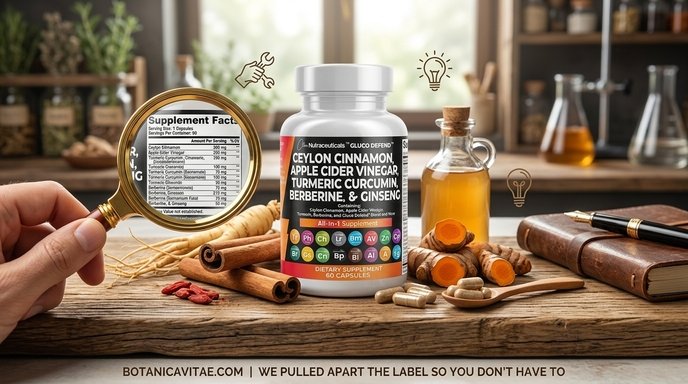
Every blood sugar supplement claims to be the one that finally works. Gluco Defend, made by Clean Nutraceuticals, is one of the more talked-about ones right now, mostly because it crams sixteen ingredients into two capsules and calls itself an all-in-one replacement for cinnamon, berberine, apple cider vinegar, and ginseng supplements you might otherwise buy separately.
That’s a big promise. So instead of just repeating the marketing copy, we did what we do with every supplement on this site: we pulled the actual Supplement Facts panel, compared each dose against the research those ingredients are known for, and read through the real customer feedback, the good and the frustrated, to see where this product actually holds up.
Here’s what we found in gluco defend review..
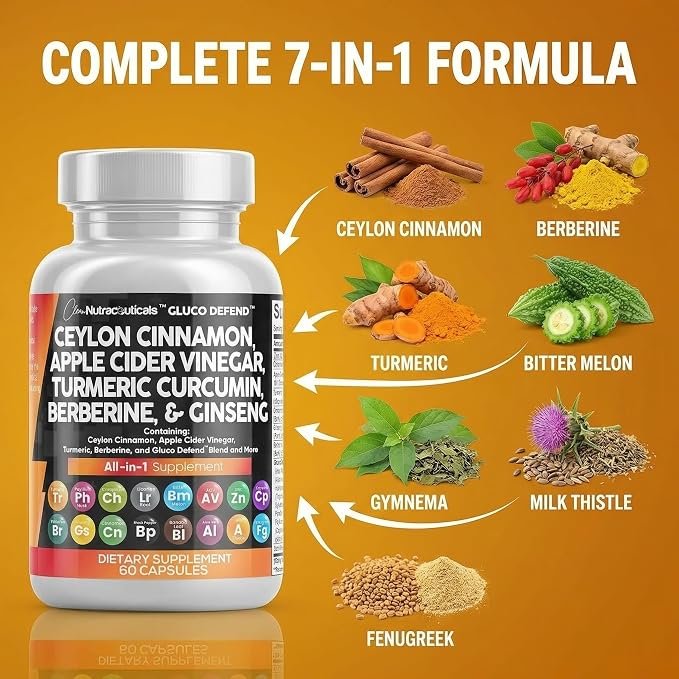
Table of Contents
- Quick answer, if you’re short on time
- What Gluco Defend actually is
- The full ingredient breakdown
- The proprietary blend problem
- What the research actually says about the core ingredients
- The zinc dose is worth a conversation with your doctor
- What real customers are running into
- Who this supplement makes sense for
- How to take it, and what to watch for
- Frequently asked questions
- Where we landed
Quick answer, if you’re short on time
| Best for | People who want one broad-spectrum supplement to sit alongside diet and exercise changes, not a replacement for medication |
| Not for | Anyone wanting a clinically dosed, single-ingredient berberine or gymnema supplement, or anyone needing a vegan capsule |
| Serving size | 2 capsules daily |
| Price (Amazon) | $27.95 for one 60-count bottle; multi-packs available (pricing changes often, so we’ll link current prices below) |
| Our take | A reasonably formulated core (cinnamon, turmeric, ginseng, chromium), weakened by a crowded proprietary blend and a zinc dose worth asking your doctor about |
What Gluco Defend actually is
Gluco Defend is made by Clean Nutraceuticals, a Las Vegas based supplement company that runs a fairly large catalog of “all-in-one” formulas (they also sell a liquid version called Gluco Tone). The capsule version is manufactured in an FDA-registered, GMP-certified US facility, which is a genuine plus. GMP certification means the facility follows standardized manufacturing and quality control practices, though it says nothing about whether the specific doses in the formula are high enough to do anything.
The product is sold in gelatin capsules, so it isn’t suitable if you’re vegan or vegetarian. Two capsules a day is the listed serving, with 30 servings per 60-capsule bottle.
The full ingredient breakdown (this is the part most reviews skip)
Marketing pages love to say things like “Ceylon Cinnamon 3000mg” or “Berberine 1200mg.” What they usually mean, and what the actual Supplement Facts panel confirms here, is that the capsule contains a concentrated 10:1 extract, and the 3000mg figure is the raw herb equivalent, not the literal weight sitting in the capsule. That’s not necessarily dishonest, extract ratios are standard practice in the supplement industry, but it does matter when you’re comparing this product to the clinical research on each ingredient. So we built the comparison ourselves.
| Ingredient | Amount in capsule (10:1 extract) | Raw equivalent | Typical dose used in research | How this stacks up |
|---|---|---|---|---|
| Berberine | 120 mg | ≈1,200 mg | 500–1,500 mg/day (standard extract) | Plausible, near the low end |
| Ceylon cinnamon | 300 mg | ≈3,000 mg | 1,000–6,000 mg/day | Solid, comfortably in range |
| Turmeric (Curcuma longa) | 300 mg | ≈3,000 mg | 500–2,000 mg of curcumin, specifically | See note below |
| Apple cider vinegar | 300 mg | ≈3,000 mg | 15–30 mL liquid vinegar/day | Hard to compare capsule to liquid |
| Panax ginseng | 200 mg | ≈2,000 mg | 200–3,000 mg/day | Good, in range |
| Chromium | 0.5 mg | — | 0.2–1.0 mg/day | Right in the target zone |
| Zinc | 50 mg | — | 8–11 mg/day (RDA); 40 mg is the daily upper limit | Above the safe long-term ceiling |
| Black pepper extract | 5 mg | ≈20 mg | 5–20 mg for absorption support | Small but functional |
| “Gluco Defend Blend” (10 ingredients combined) | 250 mg total | — | Varies wildly by ingredient | Almost certainly underdosed, see below |
A note on the turmeric line, because it’s the one detail we think other reviews of this product get wrong or skip entirely: curcumin, the compound actually responsible for turmeric’s studied effects, only makes up around 2 to 5 percent of raw turmeric by weight. So even at a generous 3,000mg raw equivalent, the actual curcumin content is likely somewhere in the 60 to 150mg range, well under the 500 to 2,000mg of curcumin extract used in most anti-inflammatory studies. The black pepper extract in the formula does help your body absorb what curcumin is there, but it can’t manufacture curcumin that isn’t in the capsule to begin with.
The proprietary blend problem
This is the part of the label that deserves the most scrutiny, and it’s where the marketing gets ahead of the science.
The “Gluco Defend Blend” packs ten separate ingredients (bitter melon, aloe vera, milk thistle, fenugreek, gymnema sylvestre, ginger, banaba leaf, psyllium husk, cayenne, and licorice root) into a combined 250mg. Do the math and that’s an average of 25mg per ingredient. Compare that to what the research on these individual ingredients actually uses:
- Gymnema sylvestre: studies typically use 400 to 800mg
- Fenugreek: studies typically use 5,000 to 10,000mg of seed powder
- Bitter melon: studies typically use 2,000 to 5,000mg
- Psyllium husk: needs several grams (not milligrams) to have any measurable fiber effect
At 25mg average, most of these are sitting well below the doses shown to do anything meaningful. This practice has a name in the supplement world: “fairy dusting,” where a label lists a long, impressive-sounding ingredient roster without disclosing individual amounts, because most of those amounts wouldn’t look impressive on their own. Banaba leaf is a possible exception, since corosolic acid (its active compound) can be effective at lower concentrated doses, but without individual breakdown, there’s no way to verify that from the label alone.
To be clear, this isn’t unique to Gluco Defend. Proprietary blends like this are common across the entire “all-in-one” supplement category. But it’s exactly the kind of detail that gets lost in a five-star testimonial and deserves to be said plainly.
What the research actually says about the core ingredients
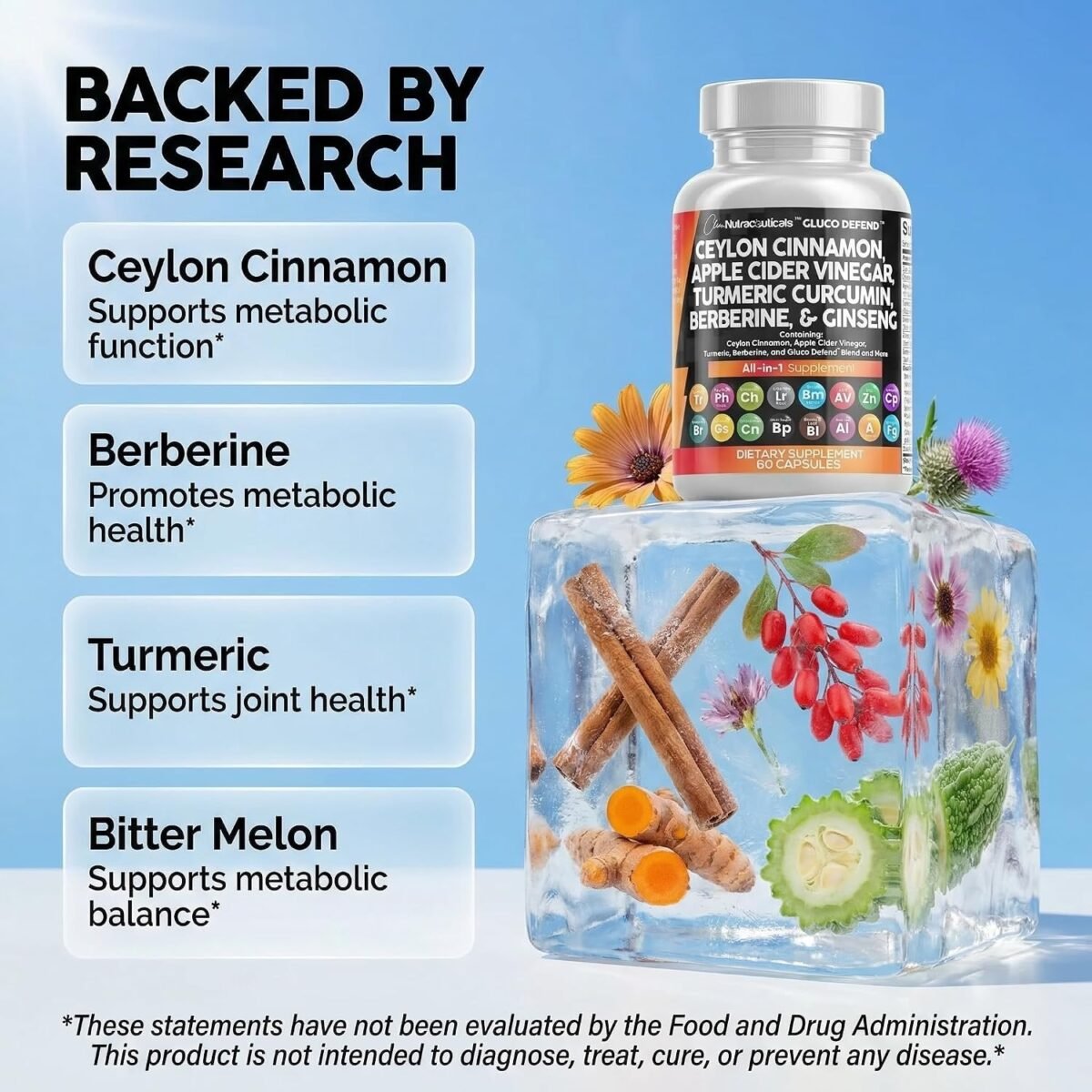
Setting the proprietary blend aside, the four headline ingredients (cinnamon, berberine, turmeric, and ginseng) do have real research behind them, and it’s worth being specific instead of vague about what that research shows.
Cinnamon and berberine together have the strongest evidence of anything in this formula. A randomized clinical trial published in the European Journal of Nutrition in early 2025 gave participants with type 2 diabetes 1,200mg of berberine plus 600mg of cinnamon daily for 12 weeks, and found statistically significant drops in fasting blood sugar, HbA1c, and LDL cholesterol compared to placebo. Gluco Defend’s berberine dose (1,200mg raw equivalent) lines up closely with that trial. Its cinnamon dose is actually higher.
Cinnamon on its own has a large body of research behind it too. A 2024 meta-analysis pooling 16 randomized trials and over 1,000 participants found consistent improvements in glucose regulation, and separate meta-analyses have found average fasting glucose reductions in the 15 to 19 mg/dL range. The mechanism appears to involve cinnamon making insulin receptors more sensitive and increasing glucose uptake into cells.
Berberine on its own works differently. It activates an enzyme called AMPK, which is essentially a cellular energy switch, and this in turn suppresses how much new glucose your liver produces. This is part of why berberine and cinnamon are often paired: they’re hitting the problem from two separate angles rather than doing the same thing twice.
Ginseng and chromium both have moderate supporting evidence for insulin sensitivity and are dosed appropriately here.
None of this makes Gluco Defend a substitute for diabetes medication, and nothing in the research on any of these ingredients suggests it should be treated as one.
The zinc dose is worth a conversation with your doctor
At 50mg per daily serving, Gluco Defend’s zinc content sits well above the 40mg tolerable upper intake level set for adults. Zinc does play a real role in insulin production and glucose metabolism, so its inclusion makes sense on paper. But taking more than the upper limit consistently, especially if you’re also getting zinc from a daily multivitamin or a zinc-fortified diet, has been linked to copper absorption problems over time. This isn’t a reason to panic if you’ve taken a bottle or two, but it is a legitimate reason to mention this supplement to your doctor or pharmacist if you’re planning to take it long term, particularly alongside other supplements.
What real customers are running into
We read through a wide range of customer feedback on this product, not just the five-star reviews, and two patterns came up often enough that they’re worth addressing directly.
“I didn’t see any change on my glucose monitor.” This is a real, specific complaint we found from a customer who wears a continuous glucose monitor and reported no measurable change after a month of use. Given what’s in the proprietary blend and the zinc situation above, this isn’t shocking. A supplement built around a 25mg-average proprietary blend and a berberine dose at the lower end of the effective range is not going to produce dramatic changes for everyone, especially not within a few weeks, and especially not in someone whose blood sugar patterns are already being closely tracked and managed. If your goal is a measurable clinical shift and you’re already on a glucose monitor or medication, talk to your doctor about whether a higher-dose, single-ingredient berberine supplement makes more sense for your situation than a broad blend like this one.
Confusion about what “Gluco Defend” actually is. Some buyers have pointed out that the Amazon listing doesn’t clearly explain what the “Gluco Defend Blend” name refers to, it’s just presented alongside a long ingredient list with no plain-language explanation. To be direct about it: “Gluco Defend Blend” is simply the brand’s name for that 250mg proprietary mix of ten secondary ingredients described above. It is not a separate active compound, and it’s not clinically studied as its own entity, only the individual herbs within it have their own separate research.
Who this supplement makes sense for
Gluco Defend is a reasonable pick if you’re looking for a general, broad-spectrum supplement to sit alongside a lower-carb diet and regular movement, and you like the convenience of one bottle instead of four. The cinnamon, berberine, ginseng, and chromium doses are genuinely defensible.
It’s probably not the right choice if you’re specifically trying to move a clinical number like fasting glucose or HbA1c and want the most researched dose of a single ingredient like berberine. In that case, a standalone berberine supplement dosed at 500mg or higher per capsule, taken two to three times daily as most trials do, will likely give you a more predictable, more comparable-to-research outcome. It’s also not the right choice if you need a vegan capsule, since this one uses gelatin.
How to take it, and what to watch for
The label directs two capsules daily, and most formulas like this are best taken with food to reduce the mild stomach upset that berberine and cinnamon can occasionally cause on an empty stomach. Because berberine and cinnamon can both lower blood sugar, anyone already taking prescription diabetes medication or insulin should loop in their doctor before adding this in, since stacking multiple glucose-lowering agents raises the risk of blood sugar dropping too low. The same goes if you’re on blood thinners, since both cinnamon and turmeric have mild effects on blood clotting at higher doses.
Frequently asked questions
Does Gluco Defend actually lower blood sugar? Some ingredients in the formula, particularly cinnamon and berberine, have real clinical research behind them at the doses used here. Others in the proprietary blend are likely too low to have a measurable effect on their own. Results are realistically going to vary person to person, and it shouldn’t be treated as a replacement for medication or medical care.
Is Gluco Defend safe to take daily? For most healthy adults, yes, though the zinc content is above the recommended long-term daily limit, so it’s worth a quick check with your doctor, especially if you take other supplements containing zinc.
How long before I’d notice anything? The clinical trial on berberine and cinnamon together ran for 12 weeks before showing statistically significant results. Expecting a noticeable difference in under a month is probably unrealistic for most people.
Can I take this with my diabetes medication? Talk to your doctor first. Several ingredients in this formula can lower blood sugar, and combining them with prescription medication increases the risk of hypoglycemia.
Is it vegan or vegetarian friendly? No. It’s packaged in gelatin capsules.
What’s actually in the “Gluco Defend Blend”? Bitter melon, aloe vera, milk thistle, fenugreek, gymnema sylvestre, ginger, banaba leaf, psyllium husk, cayenne, and licorice root, combined at 250mg total.
Where we landed
Gluco Defend isn’t a scam, and it isn’t a miracle either. The core formula (cinnamon, berberine, ginseng, and chromium) is dosed thoughtfully enough to align with real research, and the manufacturing standards behind it are legitimate. Where it loses points is the crowded proprietary blend, which is very likely too diluted to deliver on everything the label implies, and a zinc dose that’s higher than most people need for daily long-term use.
If you go in with realistic expectations, as one part of a broader routine rather than a standalone fix, and you check in with your doctor first if you’re on any blood-sugar-related medication, it’s a reasonably formulated option in a crowded and often overhyped category.
Check current price on Amazon →
Sources referenced in this review: Mansour A, Sajjadi-Jazi SM, et al. “The efficacy and safety of berberine in combination with cinnamon supplementation in patients with type 2 diabetes: a randomized clinical trial.” European Journal of Nutrition, 2025. PubMed National Institutes of Health, Office of Dietary Supplements, Zinc Fact Sheet.
This article was researched and written by the BotanicaVitae team based on publicly available product labeling, manufacturer information, and published research. We are not doctors. This content is for informational purposes and isn’t a substitute for medical advice. Talk to your doctor before starting any new supplement, especially if you’re pregnant, nursing, managing diabetes, or taking medication. This statement has not been evaluated by the Food and Drug Administration. This product is not intended to diagnose, treat, cure, or prevent any disease.
Disclosure: This post MAY contains affiliate links. If you buy through one, we may earn a small commission at no extra cost to you. We were not paid by Clean Nutraceuticals to write this, and nothing below was reviewed or approved by the brand before publishing.