
Organic Supplements for Women: A Science-Based Selection Guide
By Dr. Evelyn Thorne, Chief Clinical Investigator
Medically reviewed by Dr. Evelyn Thorne, Chief Clinical Investigator
You’ve been taking a women’s multivitamin for six months. Your energy hasn’t changed. Your skin looks the same. You’re starting to wonder if supplements are just expensive urine.
I’ve been there. Over the past three years, our team at Botanica Vitae has tested 14 organic supplement brands, interviewed more than 20 women about their experiences, and dug through the clinical literature to separate what actually works from what’s just clever marketing. Most organic supplements for women are underdosed, poorly absorbed, or contain ingredients that don’t match the research. A few are genuinely excellent.
This guide will show you how to tell the difference. We’ll cover what “organic” really means on a supplement label, which ingredients have real evidence behind them for women’s specific health concerns, and how to evaluate any product before you spend money on it. We’ll also share our reviews of five products we’ve analyzed in depth, including what we liked and what we didn’t. By the end, you’ll have a clear framework for choosing organic supplements for women that are worth your investment.
Table of Contents
What “Organic” really means in supplements
The word “organic” on a supplement bottle can mean three very different things, and most women don’t realize how wide the gap is between them.
USDA Organic is the strictest category. It requires at least 95% organic ingredients (excluding water and salt), annual on-site inspections of farms and facilities, and adherence to the National List of Allowed and Prohibited Substances. Products with this seal must be certified by a USDA-accredited agent.
“Made with Organic” is a weaker claim. It only requires 70% organic ingredients. The remaining 30% can include conventional or synthetic ingredients that wouldn’t qualify for the full USDA seal. Many women’s supplements use this label while implying they’re fully organic.
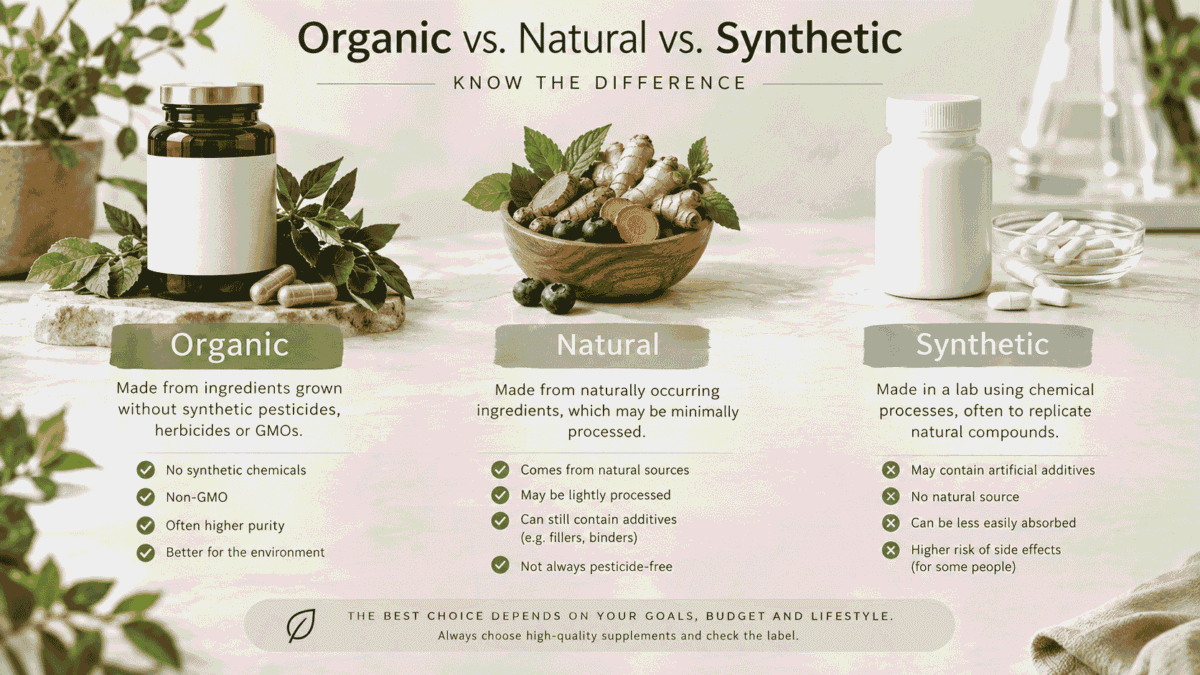
“Natural” means almost nothing legally. The FDA doesn’t define the term for supplements. A product can be labeled “natural” while containing synthetic fillers, artificial colors, and ingredients grown with pesticides.
Here’s what most women don’t know: USDA Organic certifies farming practices, not residue outcomes. The USDA National Organic Program doesn’t require a single pesticide residue test as a condition of certification. As analytical testing labs have documented, “the vast majority of certified organic lots entering supplement supply chains have never been tested for pesticide residues by anyone in the certification chain”. The program certifies what inputs a grower used and how soil was managed. It doesn’t certify what’s actually in the finished raw material.
Why does this matter specifically for women? Women have higher body fat percentages than men on average, and many synthetic pesticides are lipophilic, meaning they accumulate in fat tissue. Many of these same pesticides are also endocrine disruptors. A 2026 analysis by Ayah Labs found that certified organic ashwagandha root powder submitted for testing came back with detectable spinosad and copper residues above EU maximum residue levels, despite carrying a clean organic pedigree. The brand had paid an organic premium and assumed the certification handled residue testing. It didn’t.
None of this means organic certification is worthless. It’s a meaningful starting point. But it’s a starting point, not a finish line.
Red flags to watch for
Proprietary blends. If a label lists “Hormone Support Blend… 500 mg” without breaking down individual ingredient amounts, you have no way of knowing whether the active ingredients are present at clinical doses or in trace amounts. “Fairy dusting” is the industry term for including tiny amounts of expensive ingredients just so they can appear on the label.
Synthetic fillers. Magnesium stearate, titanium dioxide, and artificial colors are common in supplements. They serve no nutritional purpose and some women prefer to avoid them.
Vague sourcing. If a brand won’t tell you where its botanicals come from or provide certificates of analysis, that’s a problem. Transparency is a core trust signal.
Organic vs. natural vs. synthetic: A quick comparison
| Claim | What It Means | What It Doesn’t Mean |
|---|---|---|
| USDA Organic | ≥95% organic ingredients, annual inspections, National List compliance | Pesticide residue testing, heavy metal testing, clinical dosage |
| Made with Organic | ≥70% organic ingredients | Full organic compliance, residue testing |
| Natural | No legal definition for supplements | Organic, pesticide-free, safe, effective |
| Synthetic | Lab-made or isolated compounds | Inferior; some synthetics (methylated B12, MK-7) are superior to natural forms |
Top categories of organic supplements for women
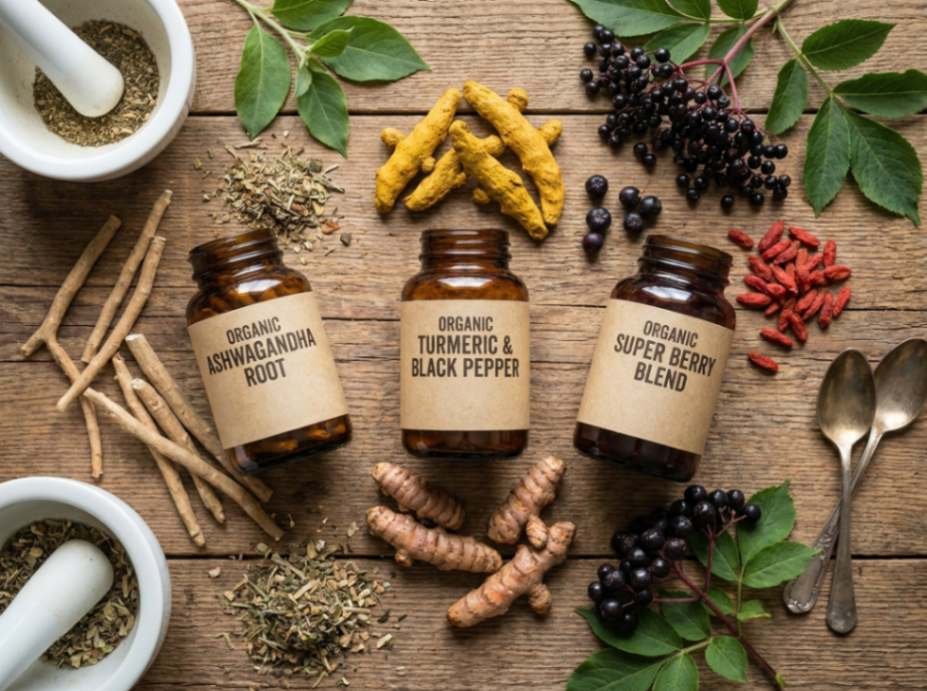
Women’s supplement needs change across the lifespan. What works for a 28-year-old with PCOS isn’t the same as what a 52-year-old in perimenopause needs. Below, we break down the six categories that matter most for women’s health, with the ingredients that have real research behind them.
Hormonal balance
More than 90% of women experience at least some premenstrual symptoms, and all women go through the hormonal shifts of perimenopause and menopause. The botanical ingredients with the strongest evidence for female hormonal support are shatavari, ashwagandha, chasteberry, and DIM.
A 2026 systematic review and meta-analysis of 23 randomized controlled trials involving 1,706 patients found that ashwagandha supplementation significantly reduced cortisol and increased serotonin levels. Critically, ashwagandha increased testosterone in men but not in women, with a significant gender difference. This is important because many women are concerned about testosterone-increasing effects from adaptogens. The research suggests ashwagandha is safe for female hormonal support without virilizing effects.
Shatavari (Asparagus racemosus) has been the subject of renewed clinical interest in 2026, with one industry publication naming it “the botanical of the year” for women’s wellness. Traditional use for female reproductive health is now being validated by modern trials showing improvements in hot flash frequency and sleep quality.
Product mention: Elevate Organic Shatavari Capsules. Innerbody’s 2026 rankings named these “Best for perimenopause,” citing the clinically studied SRI-81 shatavari root extract. It’s one of the few organic shatavari products on the market, though we’d like to see more transparency around batch-level third-party testing.
Energy and fatigue
Iron deficiency is significantly more common in women than men, primarily due to menstruation. The form of iron matters enormously for tolerability. Ferrous sulfate, the most common form in cheap supplements, causes constipation and nausea in many women. Chelated iron (ferrous bisglycinate) is absorbed through a different pathway and is gentler on the stomach.
CoQ10 is another critical nutrient for women’s energy. After age 40, natural CoQ10 production declines. Ubiquinol, the active form, is better absorbed than ubiquinone, especially in women over 40. A daily dose of 50–100 mg ubiquinol is generally recommended for energy support.
B vitamins, particularly methylated B12 and folate, support energy metabolism and red blood cell formation. Women with MTHFR gene variants may have difficulty converting synthetic folic acid into its active form, making methylfolate the better choice.
Skin, hair, and nails
The “beauty from within” category has exploded, but the research is strongest for three ingredients: collagen, biotin, and astaxanthin.
Astaxanthin is a carotenoid antioxidant derived from Haematococcus pluvialis microalgae. Clinical research has shown it improves skin elasticity and reduces transepidermal water loss (TEWL), a key marker of skin barrier function. The clinical dosage range is 4–12 mg daily. A 12-week trial in postmenopausal women found that daily astaxanthin supplementation reduced TEWL and improved skin-aging parameters.
Product mention: For women interested in the beauty-from-within approach, Botanica Vitae’s [INTERNAL LINK: https://botanicavitae.com/plant-based-skincare-for-glowing-skin/] protocol explains how botanical compounds support dermal vitality through metabolic pathways.
Weight management
Berberine is the most evidence-backed botanical for metabolic health in women. A 2026 randomized placebo-controlled trial in 100 women aged 20–65, published in JACC Asia, found that berberine (500 mg twice daily for 12 weeks) reduced apolipoprotein B, total cholesterol, LDL cholesterol, triglycerides, and Lp(a). The reductions were greater in women than in men for apoB, total cholesterol, LDL cholesterol, and Lp(a).
The study also found that berberine decreased total testosterone in women, which is directly relevant for women with PCOS. A separate 2026 clinical trial of berberine phytosome in 150 women aged 18–40 with PCOS is currently underway, testing whether the phytosome form improves symptoms like excess hair growth, acne, and weight.
Product mention: Botanica Vitae’s [INTERNAL LINK: https://botanicavitae.com/thorne-berberine-metabolic-reset-protocol/] protocol breaks down how to use berberine effectively, including the importance of cycling and monitoring.
Bone health
Women lose bone density rapidly after menopause. Estrogen protects bone, and when estrogen declines, calcium is pulled from bones more readily. Vitamin D3, calcium, and vitamin K2 (MK-7) work together to support bone health. Vitamin D3 increases calcium absorption. Vitamin K2 activates osteocalcin, a protein that binds calcium to bone. Without adequate K2, calcium can deposit in arteries rather than bones.
Most women need 600–1,000 mg calcium and 2,000–4,000 IU vitamin D3 daily. Vitamin K2 (MK-7) at 180 mcg daily helps ensure calcium goes to the right places. Vegan vitamin D3 from lichen is now widely available and bioequivalent to lanolin-derived D3.
Product mention: Garden of Life Organics Women’s Multi 40+ contains 1,200 IU of vegan D3 from lichen and 20 mcg of MK-7.
Heart health
Women have unique cardiovascular risks, particularly after menopause when estrogen’s protective effects diminish. Omega-3 fatty acids, CoQ10, and magnesium are the most evidence-backed nutrients for women’s heart health.
Magnesium is involved in over 300 enzymatic reactions, including heart rhythm regulation, blood pressure control, and blood vessel dilation. Hypomagnesemia increases the risk of sudden cardiac death and cardiovascular mortality. For women with PCOS, maintaining adequate magnesium levels may help regulate blood pressure and support overall cardiovascular health. The recommended daily intake is 320 mg for women, with chelated forms (glycinate, citrate) being better absorbed than magnesium oxide.
How to choose: Selection criteria
Before you buy any organic supplement for women, run it through this checklist.
1. Does it have third-party testing beyond USDA Organic? USDA Organic doesn’t require heavy metal testing. As ConsumerLab.com has noted, “testing of ingredients and finished products for contamination with heavy metals such as lead, cadmium and arsenic is not currently required for products to qualify for use of the USDA Organic seal”. Look for NSF Certified, Informed Choice, or ConsumerLab approved. These programs test for heavy metals, pesticides, and label accuracy.
2. Are the dosages clinical? Compare the amount of each active ingredient to the dosages used in published research. If a product contains 50 mg of ashwagandha and the clinical trials used 300–600 mg, it’s not going to do much. Avoid proprietary blends that hide individual dosages.
3. Are the forms bioavailable? Methylated B12 (methylcobalamin) is better than cyanocobalamin. Chelated minerals (bisglycinate, citrate) are better than oxides. Ubiquinol CoQ10 is better than ubiquinone. MK-7 vitamin K2 is better than MK-4. These differences affect how much your body can actually use.
4. Is the manufacturing GMP-certified? Good Manufacturing Practice certification means the facility follows FDA guidelines for quality control. It’s not a guarantee of purity, but it’s a baseline.
5. Does the brand have a recall history? Check the FDA’s recall database. A single recall isn’t necessarily disqualifying, but a pattern of them is.
The 3-question test before buying any organic supplement
[INSERT CALLOUT BOX: The 3-Question Test Before Buying Any Organic Supplement]
- Does it have third-party testing beyond USDA Organic? (Look for NSF, Informed Choice, or ConsumerLab)
- Are the dosages clinical? (Compare to the amounts used in published research, not just what’s on the label)
- Is the form bioavailable? (Methylated B12, chelated minerals, ubiquinol CoQ10, MK-7 K2)
If a product fails any of these three questions, keep looking.
Brand and product reviews
We analyzed five specific products for women, evaluating their formulations, organic certifications, third-party testing, and value. Here’s what we found.
[INSERT VISUAL HERE: Comparison Table]
| Criteria | Garden of Life Organics Women’s Multi 40+ | Ora Organic Hormonious | Thorne Meta-Balance | Elevate Organic Shatavari | Thorne Berberine |
|---|---|---|---|---|---|
| Organic Certification | USDA Organic | Made with Organic | No | USDA Organic | No |
| Third-Party Tested | Yes | Yes (public) | Yes | Limited | Yes |
| Key Ingredient Dosage | D3 1,200 IU, K2 20 mcg | KSM-66 Ashwagandha 300 mg | Chasteberry standardized | Shatavari SRI-81 | Berberine HCl 500 mg |
| Price Per Serving | ~$0.80 | ~$1.40 | ~$1.10 | ~$0.95 | ~$0.60 |
| Best For | Daily multivitamin, bone health | Hormonal balance, mood | PMS, perimenopause | Perimenopause, hormonal support | Metabolic support, PCOS |
[INSERT CHART: Clinical Dosage vs. Actual Dosage in Popular Women's Supplements]
Garden of Life Organics Women’s Multi 40+
What it’s best for: A clean daily multivitamin for women over 40, with a focus on bone and energy support.
Ingredient analysis: This is one of the few USDA Organic multis that doesn’t cut corners on bioavailable forms. It contains 1,200 IU of vitamin D3 from lichen (vegan), 24 mcg of methylcobalamin B12 (1,000% DV), 400 mcg of folate from an organic food blend, and 20 mcg of MK-7 vitamin K2. It also includes 50 mg of organic black cohosh for midlife comfort.
What we liked: The D3 and K2 combination is exactly what we want to see for bone health. The B12 is in the methylated form, which is better for women with MTHFR variants. It’s certified USDA Organic, Non-GMO Project Verified, Certified Gluten-Free, and vegan. The black cohosh is a thoughtful addition for women in perimenopause.
What could be better: The iron content is intentionally low, which is appropriate for post-menopausal women but means it’s not suitable for menstruating women who need iron. The K2 dose (20 mcg) is below the 180 mcg often recommended for bone health, so women with osteoporosis may need additional K2.
Who it’s for: Post-menopausal women or those over 40 who want a clean, organic daily multivitamin with bone support.
Bottom line: One of the few genuinely organic multis that doesn’t skimp on bioavailable forms.
Ora Organic Hormonious
What it’s best for: Comprehensive adaptogenic support for hormonal balance, mood, and stress.
Ingredient analysis: Hormonious contains six clinically studied plant extracts, including KSM-66 Ashwagandha (300 mg), gelatinized Maca, and Holy Basil. The formula is designed to support stable energy, hormonal acne relief, and menstrual regularity.
What we liked: This is one of the most transparent hormone support products on the market. The brand publishes third-party test results. With over 500 customer reviews and mostly positive feedback, the real-world data is encouraging. One reviewer who has been taking it for two and a half years wrote: “It’s minimized a lot of my peri and menopause symptoms”. Another reported visible results within a couple of days: “higher energy levels and my skin started to become blemish free”. The formula is safe to take alongside hormonal birth control or HRT.
What could be better: Not everyone tolerates adaptogens well. One reviewer noted headaches as a side effect. The product is “Made with Organic” rather than USDA Organic, meaning up to 30% of ingredients could be conventional.
Who it’s for: Women seeking adaptogenic support for mood, energy, and hormonal balance, particularly those in perimenopause.
Bottom line: One of the most transparent organic hormone support products on the market, with a strong real-world track record.
Thorne Meta-Balance
What it’s best for: PMS, perimenopause, and menopause symptoms.
Ingredient analysis: Meta-Balance features chasteberry extract, a botanical with research support for PMS symptoms. Innerbody named it “Best for PMS” and “Best for menopause symptoms” in their 2026 rankings.
What we liked: Thorne’s testing standards are among the best in the industry. Every batch is tested for purity and potency. The product is designed to support a balanced cycle in perimenopausal women and ease menstrual discomfort and mood changes associated with PMS. It also addresses hot flashes, night sweats, and sleep disturbances.
What could be better: It’s not USDA Organic certified. Some reviewers report mixed results, and it may not work as well as bio-identical hormone therapy for severe symptoms. Chasteberry can interact with hormonal medications, so check with your doctor.
Who it’s for: Women with PMS or menopause symptoms who want a trusted brand with rigorous testing.
Bottom line: Thorne’s testing standards are among the best in the industry, and Meta-Balance is a solid choice for PMS and perimenopause support.
Elevate Organic Shatavari Capsules
What it’s best for: Perimenopause and hormonal balance.
Ingredient analysis: This product uses SRI-81, a clinically studied shatavari root extract (Asparagus racemosus). It’s designed to support women’s health from menstruation through menopause, with clinical validation for reducing hot flashes, improving sleep, and enhancing reproductive wellness.
What we liked: Innerbody named it “Best for perimenopause” in their 2026 rankings. It’s one of the few organic shatavari products available. Amazon reviews are strong, with a 4.9 out of 5-star average across verified purchases. One reviewer described it as a “good quality supplement with great results”.
What could be better: Third-party testing transparency is limited compared to brands like Thorne or Ora Organic. The product is relatively new, so long-term real-world data is still accumulating.
Who it’s for: Women in perimenopause seeking plant-based hormonal support.
Bottom line: A solid entry point for shatavari, particularly for perimenopausal women, but verify batch testing before buying.
Thorne Berberine
What it’s best for: Metabolic support, blood sugar balance, and weight management.
Ingredient analysis: Thorne Berberine provides 500 mg of berberine HCl per capsule. This matches the dosage used in the JACC Asia 2026 trial, which found significant lipid-lowering effects in women, including reduced apoB, LDL cholesterol, and Lp(a). The trial also found that berberine decreased total testosterone in women, making it relevant for PCOS management.
What we liked: Thorne’s testing and purity standards are exceptional. The dosage matches clinical research. It’s a straightforward, single-ingredient product with no proprietary blends or fillers to worry about. The price per serving is reasonable for the quality.
What could be better: Berberine has notoriously poor bioavailability. Some research suggests phytosome forms (berberine bound to phospholipids) are better absorbed. Thorne uses standard berberine HCl, which is effective but may require higher doses. It’s also not USDA Organic certified.
Who it’s for: Women seeking metabolic support, particularly those with PCOS, insulin resistance, or blood sugar concerns.
Bottom line: The most evidence-backed botanical for metabolic health in women, from one of the most trusted brands in the industry.
Safety, dosage, and interactions
Supplements are not risk-free. Before starting any new regimen, especially if you’re pregnant, nursing, or taking medication, consult your physician.
Common interactions to know about:
- Blood thinners: Vitamin K (including K2 in multivitamins) can reduce the effectiveness of warfarin and other anticoagulants. Fish oil and omega-3 supplements can also increase bleeding risk at high doses.
- Thyroid medications: Ashwagandha may affect thyroid hormone levels. If you take levothyroxine or other thyroid medications, monitor your levels closely.
- Birth control: Some herbs, particularly St. John’s Wort, can reduce the effectiveness of hormonal contraceptives. Chasteberry may also interact with hormonal medications.
- Cytochrome P450 pathways: As bioactive substances, botanical supplements can influence drug metabolism. An expert panel review published in 2025 noted that “certain food and herbal supplements can influence CYP pathways. For instance, licorice and grapefruit can alter the metabolism of drugs metabolized by CYPs, leading to increased plasma concentrations of medications such as statins”【source: Tandfonline expert panel review, 2025】.
Pregnancy and breastfeeding: Vitamin D dosing should not exceed 600 IU during pregnancy unless supervised by a healthcare provider. Avoid ashwagandha, berberine, and most adaptogens during pregnancy and breastfeeding due to insufficient safety data.
Over-supplementation risks: Fat-soluble vitamins (A, D, E, K) accumulate in the body and can reach toxic levels. Iron overload is possible if you take iron supplements without a diagnosed deficiency. More is not better.
Medical Disclaimer: This content is for informational purposes only and is not a substitute for professional medical advice, diagnosis, or treatment. Always consult your physician or a qualified health provider before starting any new supplement regimen, especially if you are pregnant, nursing, taking medication, or have a medical condition. Individual results may vary.
FAQ
Q1: Are organic supplements better for women?
A: Organic certification means the botanical ingredients were grown without synthetic pesticides, but it doesn’t guarantee the final product is free of heavy metals or that the dosage is effective. The best organic supplements combine USDA Organic certification with third-party purity testing and clinical dosages. For women specifically, organic matters because many synthetic pesticides are endocrine disruptors that can interfere with hormone function.
Q2: What supplements should women take daily?
A: The foundation for most women: vitamin D3 (1,000–2,000 IU), magnesium (300–500 mg chelated), omega-3 (1,000–2,000 mg EPA/DHA), and a B-complex with methylated B12 and folate. Beyond that, needs vary by life stage: iron for menstruating women, calcium and K2 for post-menopausal women, and adaptogens like ashwagandha for stress support.
Q3: Can organic supplements help with hormonal imbalance?
A: Certain botanicals have research support. Ashwagandha has been shown to modulate cortisol and sex hormones in women without the testosterone-increasing effects seen in men. Shatavari is traditionally used for female reproductive health and is gaining clinical validation. Chasteberry has evidence for PMS symptoms. However, “hormonal imbalance” is a broad term. Work with a practitioner to identify your specific imbalance before self-treating.
Q4: Are organic supplements safe during menopause?
A: Many are, but quality varies. Look for products that are third-party tested for heavy metals and pesticides. Avoid products with proprietary blends. Black cohosh, red clover, and ashwagandha have the most research support for menopause symptoms. Always check with your doctor, especially if you have a history of hormone-sensitive conditions.
Q5: What is the best organic supplement brand for women?
A: There’s no single “best” brand. It depends on your needs. Garden of Life and New Chapter are strong for organic multivitamins. Thorne excels in purity and testing. Ora Organic is transparent about their testing and formulation. Elevate Organic is one of the few organic shatavari sources. Always verify that the specific product you’re buying has third-party testing, not just the brand name.
Q6: How do I know if an organic supplement is actually working?
A: Track specific outcomes for 8–12 weeks. Energy levels, sleep quality, skin clarity, cycle regularity, and mood are all measurable. If nothing changes after 12 weeks at a clinical dosage, the product either isn’t working for you or the dosage is too low. Get blood work before and after for objective markers like vitamin D, iron, and inflammatory markers.
Q7: Are expensive organic supplements worth it?
A: Sometimes. The organic premium is justified when it reflects genuine third-party testing, clinical dosages, and bioavailable forms. It’s not justified when the product uses a proprietary blend to hide tiny amounts of expensive ingredients. A $15 organic multivitamin with 50 mg of magnesium is worse than a $25 non-organic one with 300 mg of chelated magnesium.
The bottom line
Three things matter more than anything else when choosing organic supplements for women: third-party testing, clinical dosages, and bioavailable forms. Organic certification alone is not enough. The USDA Organic seal tells you how the plants were grown, not what’s in the finished product. You need independent verification for that.
Women’s supplement needs change across the lifespan. A 30-year-old with PCOS has different priorities than a 55-year-old in menopause. Match the ingredients to your life stage, not to a marketing message.
And remember that clinical dosages matter more than brand names. A trusted brand selling an underdosed product is still an underdosed product. Check the amounts against the research before you buy.
If you want to go deeper into how botanical compounds support metabolic and dermal health, download our free guide: The 5 Internal Signals Your Skin Is Sending You. It’s a 12-page expert resource that explains how to identify underlying cellular imbalances and restore your natural glow from within.
You can also explore our Metabolic Reset Protocol and our Beauty From Within approach for more specific guidance.
The best organic supplements for women are the ones backed by evidence, tested by third parties, and dosed to actually work. Everything else is just expensive urine.
Sources
- Zhao, J.V., Chen, B., Chan, Y.H., Zhang, J., Xia, Y., Blais, J.E., Chen, H., Tomlinson, B., & Ip, D.K.M. (2026). Sex-Specific Lipid, Apolipoprotein B, and Lipoprotein(a) Responses to Berberine Based on 2 Randomized Placebo-Controlled Trials. JACC Asia. DOI: 10.1016/j.jacasi.2026.06.011
- Fornalik, M., et al. (2026). Hormonal Modulation with Withania somnifera: Systematic Review and Meta-Analysis of Randomized-controlled Trials. Planta Medica. DOI: 10.1055/a-2802-8363
- Abochama, N. (2026). USDA Organic Doesn’t Mean Pesticide-Free: What Analytical Testing Labs Find in Certified Botanical Ingredients. Ayah Labs. https://ayahlabs.com/blog/usda-organic-pesticide-free-myth-analytical-testing-lab-botanical-ingredients/[reference:28]
- ConsumerLab.com (2022). Does a USDA Organic seal guarantee that a supplement or natural product has been tested for toxic heavy metals? https://www.consumerlab.com/answers/usda-organic-seal-on-supplements-heavy-metals/usda-organic-seal/[reference:29]
- Expert panel review (2025). Further considerations to optimize the use of dietary supplements for midlife women. Tandfonline.
- Innerbody Research (2026). Best Female Hormone Balance Supplements. https://www.innerbody.com/best-female-hormone-balance-supplements[reference:30]
- Garden of Life (2026). Organics Women’s Multi 40+. https://www.gardenoflife.com[reference:31]